

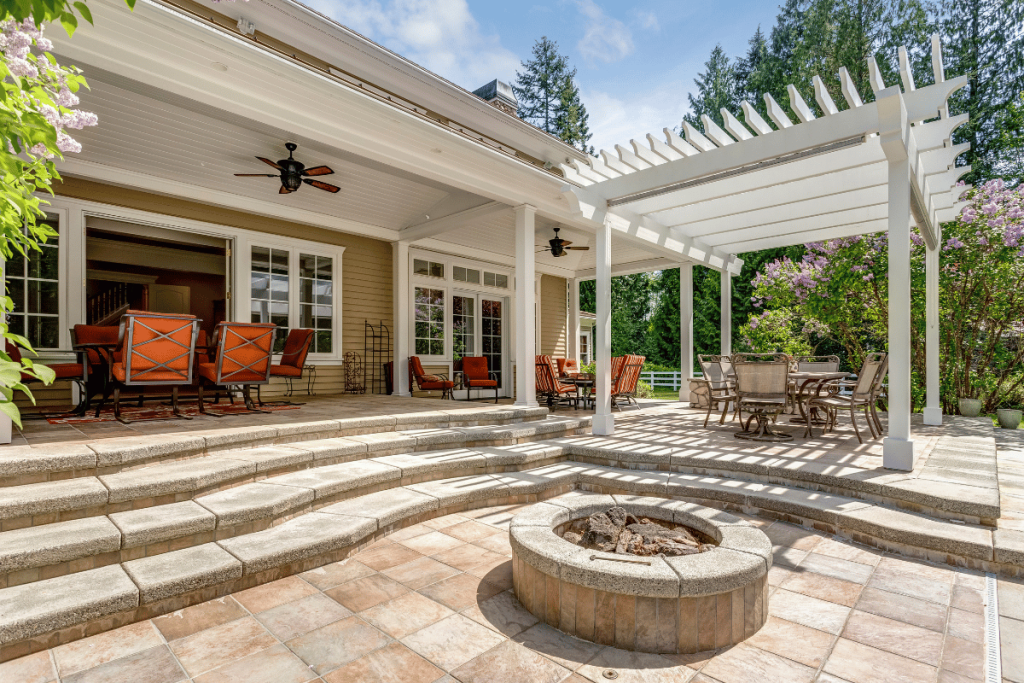
Creating a round patio with square pavers may sound challenging, but with proper planning and installation, homeowners in Kitchener, Waterloo, and Cambridge can create a beautiful and functional outdoor living space. Whether you are planning a cosy seating area, a barbecue space, or a focal point for entertaining, this guide explains the main steps involved in a successful round patio project.
Plan Your Patio Layout
Start by choosing a suitable location for the patio. Consider sunlight, drainage, privacy, and access from the home.
Once the location is selected, identify the centre of the patio and mark the planned radius. Stakes, string, landscape marking paint, or sand can be used to outline the circular shape before excavation begins.

Accurate planning helps confirm that the patio fits the available yard space and does not interfere with walkways, drainage routes, property boundaries, or other landscaping features.
For larger outdoor projects, following a clear renovation timeline can help coordinate design decisions, material orders, excavation, installation, and weather-related delays.
Choose the Right Pavers
Square pavers can work well in a circular patio when they are arranged carefully and adjusted around the outside edge. Common paver sizes provide flexibility, but the best option depends on the patio diameter, pattern, and desired appearance.
Select exterior pavers with suitable strength, traction, and resistance to moisture and freeze-thaw conditions. Concrete pavers are commonly used in Southwestern Ontario because they are available in many sizes, textures, and colours.
Keep in mind that some perimeter pieces may need to be professionally cut to maintain a clean circular edge. This work requires suitable equipment, protective gear, and experience.
Prepare the Base
A stable base is one of the most important parts of a durable paver patio. Grass, roots, organic material, and unsuitable soil must be removed from the installation area.
A compacted granular base is then installed to support the pavers and promote drainage. A bedding layer is added above the compacted base to help position and level the individual stones.
The required excavation depth and base thickness depend on soil conditions, expected use, drainage, and the paver system being installed. Poor base preparation can lead to sinking, spreading, or uneven surfaces over time.
Homeowners comparing patio construction methods may also find it useful to review how a raised concrete patio is planned for sloped or uneven properties.
Arrange the Pavers
Begin arranging the square pavers according to the selected pattern. The installation may start near the centre or from a straight reference line, depending on the design.
Continue checking alignment, spacing, and surface level as the pattern expands toward the circular boundary.

The outside row will usually require smaller or specially shaped pieces to create a smooth circular edge. Paver cutting can produce sharp fragments and hazardous dust, so edge pieces should be prepared by an experienced installer using appropriate equipment and safety controls.
Fill and Stabilize the Joints
Once the pavers are positioned, jointing sand or another manufacturer-approved joint material is swept between them.
The surface is then compacted as required by the selected paver system. Additional joint material may be needed after compaction to fill spaces that have settled.
When polymeric sand is used, it must be applied and activated according to the manufacturer’s directions. Incorrect application can leave residue on the pavers or prevent the joints from setting properly.
Secure edge restraints should also be installed to prevent the circular perimeter from spreading over time.
Add the Finishing Touches
Landscaping around the patio can help the circular shape blend naturally into the backyard. Plants, decorative stone, low shrubs, or garden borders can soften the edge and create a more finished appearance.

Outdoor lighting, furniture, and a clear walking path can improve both usability and safety. Thoughtful landscaping can also support the home’s overall appearance, especially when combined with other curb-appeal improvements.
Check Drainage and Local Requirements
The finished patio should direct water away from the home and avoid blocking existing drainage routes. Water should not be allowed to collect against the foundation or flow onto neighbouring properties.
Depending on the patio’s height, location, retaining features, and connection to other structures, municipal requirements may apply. Professional permit and inspection services can help determine whether approvals are needed before work begins.
Maintain the Patio
Regular maintenance helps the patio remain safe and attractive. Basic care includes:
- Removing leaves, dirt, and other debris
- Cleaning stains before they become permanent
- Checking for loose or uneven pavers
- Refilling joint material when necessary
- Inspecting edge restraints for movement
- Using paver-safe winter maintenance products
Any sinking or drainage problems should be addressed early before they affect a larger section of the patio.
When to Hire a Professional
A small patio may be manageable for an experienced homeowner, but circular layouts require careful base preparation, grading, edge cutting, compaction, and drainage planning.
Learning how to choose a renovation contractor can help homeowners compare relevant experience, insurance, material specifications, written estimates, and project warranties.
For a larger backyard transformation, professional home renovation services can help coordinate the patio with decks, exterior doors, walkways, additions, and other property improvements.
With careful planning, a properly prepared base, suitable materials, and accurate installation, a round patio made with square pavers can become an attractive and functional backyard feature.
A well-designed patio may also contribute to long-term property value by improving the usability and appearance of the outdoor space.