

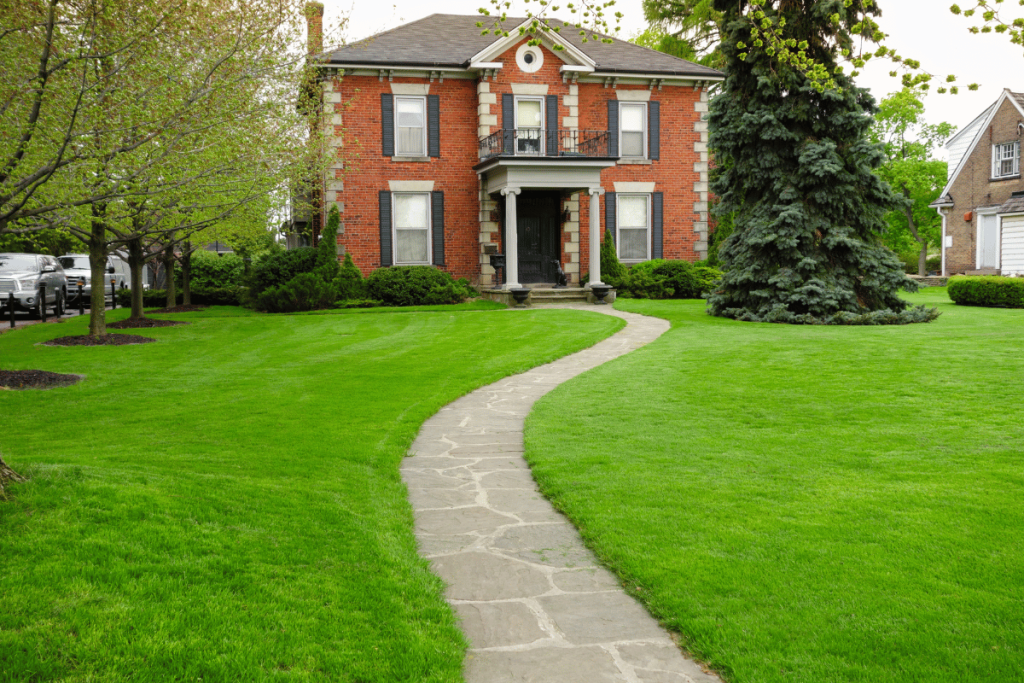
A well-built concrete sidewalk not only enhances your home’s curb appeal but also provides a safe and durable walking path. For homeowners in Kitchener, Waterloo, and Cambridge, proper base preparation, drainage, concrete finishing, and curing are essential for long-term performance.
Concrete work involves heavy materials, specialized tools, excavation, and exposure to wet concrete, so larger installations are generally best completed by experienced professionals. Below is an overview of the main stages involved.
Step 1: Plan and Measure the Walkway
Start by choosing the sidewalk’s location, width, and connection points. The layout should provide convenient access without interfering with drainage routes, property boundaries, utilities, gardens, or exterior steps.
Marking the proposed path allows you to confirm that the shape and dimensions work with the surrounding yard before excavation begins.
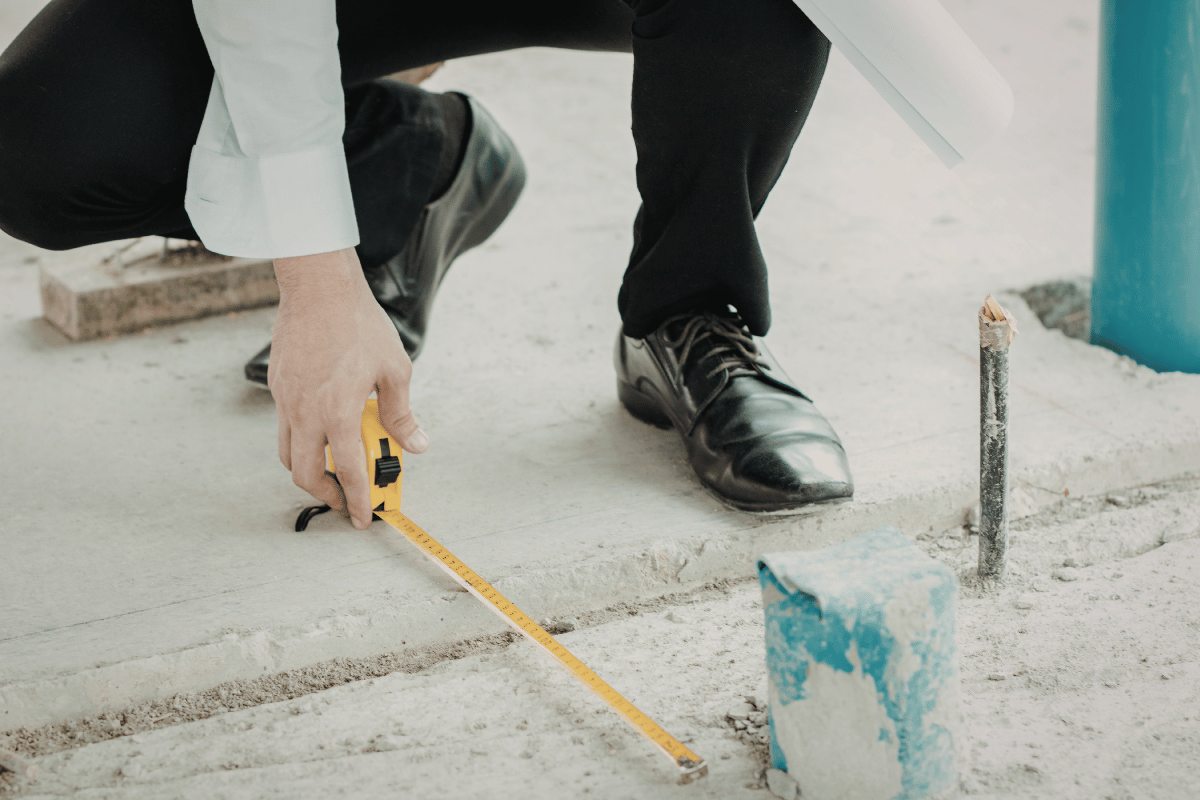
For a larger exterior project, following a clear renovation timeline can help coordinate planning, approvals, excavation, material delivery, concrete placement, and curing.
Step 2: Check Permits and Site Conditions
Before work begins, check whether municipal approval is required. Requirements may apply when the walkway connects to a public sidewalk, changes grading, crosses a property boundary, or affects drainage.
Professional permit and inspection services can help determine which local rules apply in Kitchener, Waterloo, or Cambridge.
The work area should also be checked for underground utilities and other hidden site conditions before excavation.
Step 3: Prepare the Ground
Grass, roots, organic material, and unsuitable soil must be removed from the planned walkway area. The excavation depth depends on the soil, drainage conditions, concrete design, and intended use.
The finished surface should be planned to direct water away from the home and prevent pooling along the walkway.
Proper ground preparation is particularly important in Southwestern Ontario, where freeze-thaw cycles can contribute to movement and cracking.
Step 4: Install a Compacted Base
A stable granular base helps support the concrete and manage water below the slab. The base material should be installed and compacted evenly before forms or reinforcement are added.
Poor compaction can cause sections of the walkway to settle, creating cracks, uneven edges, and tripping hazards.
Homeowners comparing exterior concrete projects can also review how base preparation and drainage are addressed when building a raised concrete patio.
Step 5: Set the Forms and Reinforcement
Forms define the sidewalk’s shape, elevation, and outside edges. They must be positioned securely and checked for alignment before concrete is placed.
Depending on the walkway design and site conditions, reinforcement may also be recommended. The appropriate materials and placement should be determined by the contractor or project specifications.
Step 6: Place and Finish the Concrete
Concrete should be placed evenly throughout the prepared forms and finished to the planned elevation and drainage slope.
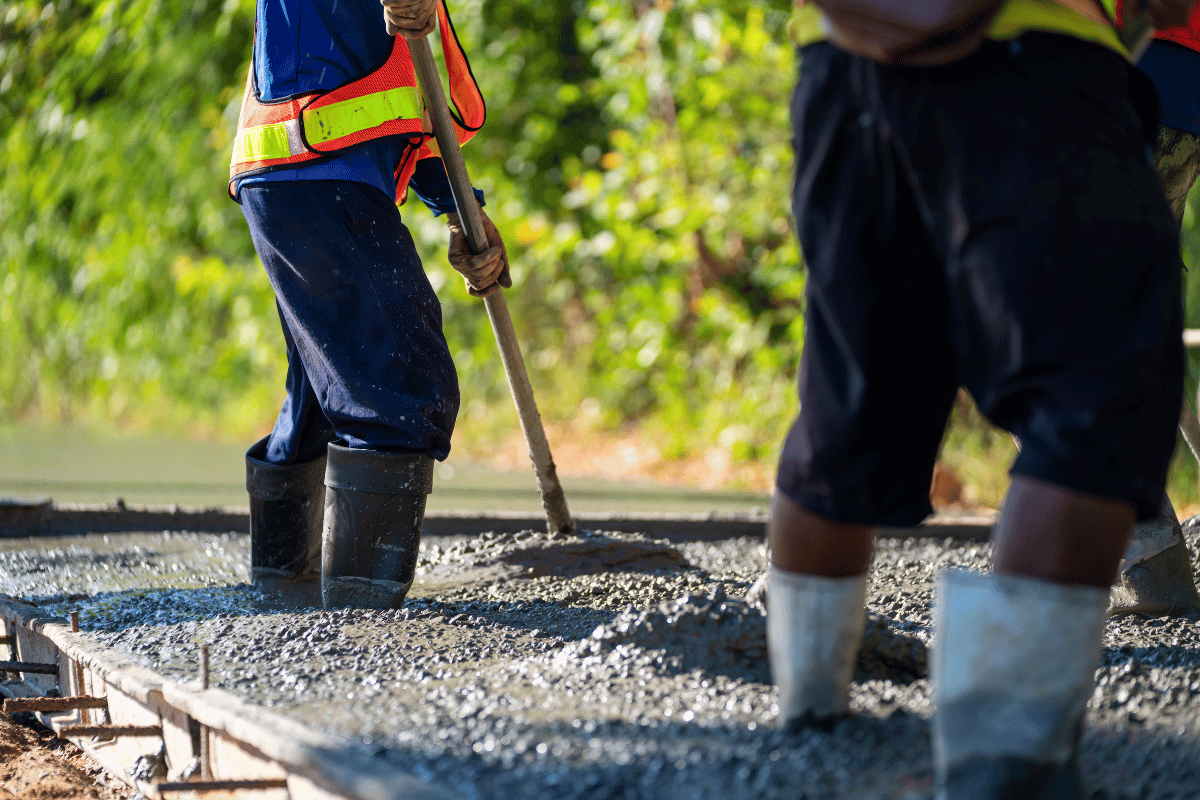
An exterior broom finish is commonly used because it provides more traction than a completely smooth surface. Edges should also be finished carefully so they are durable and visually consistent.
Wet concrete is heavy and can damage skin, while concrete placement requires coordinated handling and specialized equipment. Professional installation reduces the risk of injury, uneven finishing, and premature surface failure.
Step 7: Include Proper Control Joints
Concrete naturally expands, contracts, and develops internal stress. Properly planned control joints help encourage movement to occur along defined lines rather than through random cracks.
Joint spacing and depth depend on the walkway’s dimensions and construction specifications. These details should be finalized before the concrete begins hardening.
Step 8: Allow the Concrete to Cure
Curing is essential for developing strength and durability. The new sidewalk should be protected from early foot traffic, heavy loads, rain, freezing temperatures, and rapid moisture loss.
Weather conditions can affect both placement and curing. Reviewing common renovation delays can help homeowners plan around temperature changes, rainfall, material availability, and contractor scheduling.
Step 9: Complete the Edges and Surrounding Landscape
After the concrete has cured sufficiently, the forms can be removed and the surrounding soil or landscaping restored.
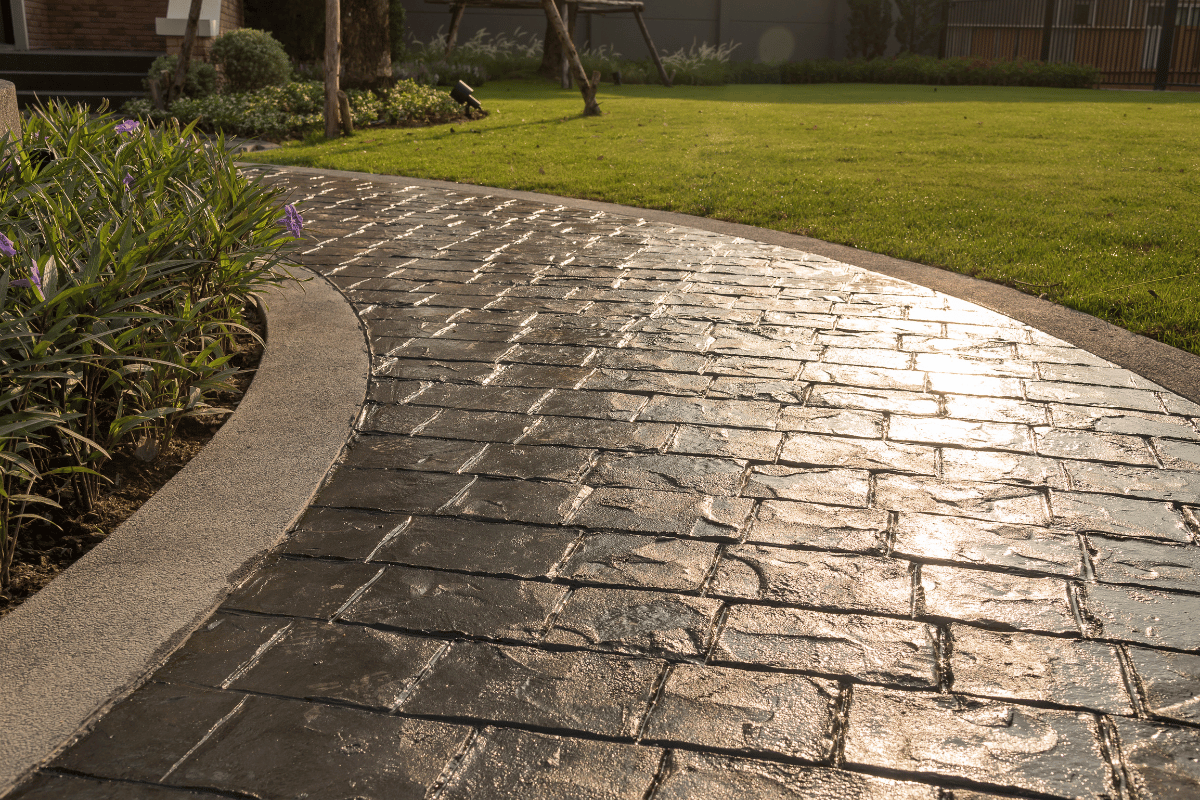
The finished edges should be supported to reduce erosion and movement. Grass, garden borders, gravel, or planting beds can then be added beside the walkway.
Make sure the surrounding grade does not direct water onto the concrete or toward the home’s foundation.
Maintain the Concrete Sidewalk
Regular maintenance can help extend the life of the walkway. Basic care includes:
- Removing leaves, dirt, snow, and other debris
- Cleaning spills before they stain the surface
- Inspecting joints and edges for deterioration
- Addressing drainage or settlement concerns early
- Using concrete-safe winter maintenance products
- Applying a suitable sealer when recommended
Avoid allowing water to collect and freeze repeatedly along cracks or unsupported edges.
When to Hire a Professional
Professional installation is recommended when the project involves extensive excavation, grading changes, public sidewalks, complex curves, drainage systems, retaining features, or connections to stairs and patios.
Learning how to choose a renovation contractor can help homeowners compare concrete experience, insurance, written estimates, materials, timelines, and warranties.
For sidewalks that are part of a wider exterior transformation, professional home renovation services can help coordinate the walkway with entrances, patios, decks, landscaping, and other improvements.
A properly planned concrete sidewalk can improve safety, accessibility, and the overall appearance of a property. With a stable base, appropriate drainage, quality finishing, and sufficient curing, homeowners in Kitchener, Waterloo, and Cambridge can create a walkway designed for long-term use.